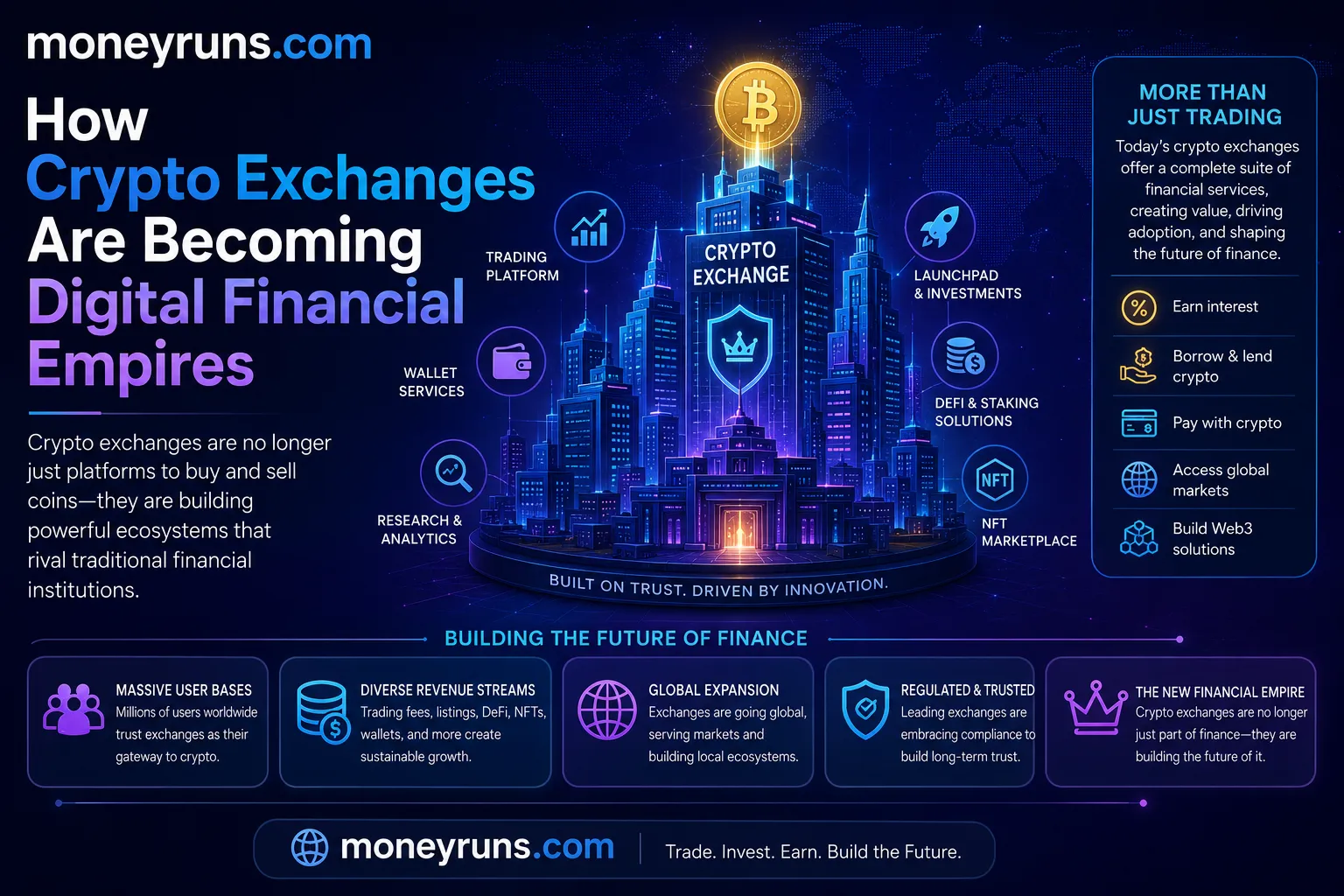
Cryptocurrency exchanges were once simple platforms where users could buy and sell Bitcoin. Today, they have evolved into massive digital ecosystems offering advanced financial services that rival traditional banks and investment firms.
Modern crypto exchanges are no longer limited to trading. They now provide staking, lending, NFT marketplaces, futures trading, decentralized finance integration, crypto payment systems, and even blockchain education. As the digital economy grows, exchanges are becoming central hubs for financial activity in the blockchain world.
This transformation has changed how millions of people interact with money, investments, and online finance. What began as a niche technology movement is now influencing global banking systems, financial regulations, and even government policies.
In this article, we will explore how crypto exchanges evolved, why they matter, the opportunities they create, the risks they face, and how they may shape the future of digital finance.
The Early Days of Crypto Exchanges
When Bitcoin first appeared, buying cryptocurrency was difficult and confusing.
Early users often relied on online forums, direct peer-to-peer transactions, or small experimental trading platforms. Security was weak, regulations were unclear, and mainstream adoption seemed unlikely.
The first crypto exchanges mainly focused on:
- Basic Bitcoin trading
- Wallet services
- Simple transactions
At that time, the industry was extremely small compared to modern financial markets.
However, as cryptocurrency gained popularity, exchanges started expanding rapidly.
The Explosion of the Crypto Economy
Over the past decade, the crypto market has grown into a multi-trillion-dollar industry.
This rapid expansion increased demand for:
- Faster trading systems
- Better security
- Mobile accessibility
- Advanced investment tools
- Global financial access
Crypto exchanges became the engines powering this growth.
Today, millions of users trade cryptocurrencies daily from smartphones, tablets, and computers across the world.
How Modern Crypto Exchanges Work
Crypto exchanges connect buyers and sellers in digital markets.
When someone wants to buy cryptocurrency, the exchange matches them with another user willing to sell.
These platforms manage:
- Order books
- Market prices
- Trading execution
- Asset storage
- Transaction verification
Many exchanges now operate 24 hours a day because cryptocurrency markets never close.
Unlike traditional stock markets, crypto trading continues continuously worldwide.
Why Exchanges Became So Popular
Several factors contributed to the rise of crypto exchanges.
1. Easy Access to Cryptocurrency
Exchanges simplified crypto investing for ordinary people.
Users no longer needed advanced technical knowledge to participate.
2. Mobile Trading Revolution
Mobile apps allowed instant crypto access from anywhere.
People could monitor prices, trade assets, and manage portfolios in real time.
3. Financial Freedom
Many users were attracted by the idea of decentralized digital finance outside traditional banking systems.
4. Profit Opportunities
The extreme volatility of crypto markets created opportunities for traders and investors.
Centralized Exchanges vs Decentralized Exchanges
The crypto industry now includes two major exchange models.
Centralized Exchanges (CEX)
Centralized exchanges are operated by companies that manage transactions and user accounts.
These platforms usually offer:
- Customer support
- Fiat currency support
- High liquidity
- Fast order execution
- Advanced trading features
They are popular because of their convenience and beginner-friendly interfaces.
However, users trust the company to safeguard their assets.
Decentralized Exchanges (DEX)
Decentralized exchanges allow direct wallet-to-wallet trading through blockchain smart contracts.
Users maintain control over their funds during transactions.
Benefits include:
- Greater privacy
- Reduced censorship
- Self-custody of assets
- No centralized control
DEX platforms are growing rapidly because many users prefer financial independence.
Security: The Biggest Challenge
Security remains one of the most important concerns in the crypto exchange industry.
Because exchanges store massive amounts of digital assets, they are major targets for hackers.
Several major exchange hacks in the past resulted in billions of dollars in losses.
Common Security Threats
Phishing Attacks
Scammers create fake websites to steal login credentials.
Malware
Malicious software can compromise user devices and wallets.
Weak Passwords
Poor password habits continue causing account theft.
Insider Risks
Internal company problems sometimes create security vulnerabilities.
How Exchanges Protect Users
Modern exchanges now use advanced protection systems.
These include:
- Cold wallet storage
- Multi-signature verification
- AI-powered fraud monitoring
- Two-factor authentication
- Withdrawal confirmation systems
- Biometric security tools
Some exchanges also maintain emergency reserve funds for user protection.
The Rise of Futures and Leverage Trading
Crypto exchanges now offer advanced trading products once limited to professional financial institutions.
Futures trading allows users to speculate on price movements without directly owning assets.
Leverage trading enables traders to borrow funds to increase potential profits.
While these tools can generate large gains, they also carry high risk.
Many inexperienced traders lose money because they underestimate market volatility.
NFT Integration and Digital Ownership
Many exchanges have expanded into NFT marketplaces.
NFTs, or non-fungible tokens, represent unique digital ownership on blockchain networks.
Users can now buy, sell, and trade:
- Digital art
- Music collectibles
- Gaming items
- Virtual assets
This expansion transformed exchanges into broader digital asset ecosystems.
The Influence of AI on Crypto Exchanges
Artificial Intelligence is becoming increasingly important in crypto trading.
AI systems can analyze market data, detect suspicious activity, and automate trading strategies.
Some exchanges now offer:
- AI trading assistants
- Automated market analysis
- Smart portfolio management
- Fraud detection systems
As AI technology improves, exchanges may become far more intelligent and personalized.
Regulation and the Future of Compliance
Governments worldwide are paying closer attention to crypto exchanges.
Regulators are concerned about:
- Money laundering
- Consumer protection
- Tax reporting
- Market manipulation
- Financial transparency
Some countries support crypto innovation, while others impose strict restrictions.
Future regulations may significantly reshape how exchanges operate globally.
Why Self-Custody Is Becoming Important
Many crypto investors are moving toward self-custody solutions.
Instead of storing assets directly on exchanges, users transfer them to personal wallets where they control private keys.
This trend increased after several major exchange failures shocked the crypto industry.
The phrase “Not your keys, not your coins” became popular among crypto communities.
Self-custody gives users more control but also increases personal responsibility.
The Future of Crypto Exchanges
The next generation of exchanges may look very different from today’s platforms.
Future developments may include:
- AI-powered trading ecosystems
- Fully decentralized financial hubs
- Cross-chain interoperability
- Integrated banking services
- Tokenized stock trading
- Real-world asset tokenization
- Advanced identity verification systems
Crypto exchanges may eventually evolve into complete digital financial networks rather than simple trading websites.
The Human Side of Crypto Trading
Despite advanced technology, emotions still heavily influence crypto markets.
Fear and greed often drive irrational trading behavior.
Many beginners make mistakes such as:
- Buying during hype cycles
- Panic selling during crashes
- Overtrading
- Ignoring security practices
- Following influencers blindly
Long-term success usually depends more on discipline and patience than short-term excitement.
Conclusion
Crypto exchanges have become the foundation of the modern digital asset economy. They provide access to blockchain technology, global financial markets, decentralized systems, and innovative investment opportunities.
What began as small Bitcoin trading platforms has transformed into a global financial revolution influencing millions of users worldwide.
However, the industry still faces major challenges involving security, regulation, transparency, and user education. As technology continues evolving, exchanges will likely become more powerful, intelligent, and integrated into everyday finance.
Whether through centralized convenience or decentralized freedom, crypto exchanges are shaping a future where digital finance becomes more accessible, global, and technologically advanced than ever before.